
Criminal defence · Valencia · Assistance across Spain
Gender-Based Violence Defence Lawyer in Valencia
Criminal defence in gender-based violence proceedings
EARLY LEGAL ASSISTANCE
Arrest
Police interview
First court hearing
PRESUMPTION OF INNOCENCE
Evidence
Defence rights
Fair process
GENDER EQUALITY
Inequality
Discrimination
Injustice
PROCEDURAL SAFEGUARDS
Evidence
Defence rights
Presumption of innocence
CHILD-RELATED MEASURES
Custody
Contact arrangements
Best interests of the child
FAMILY MEASURES
Custody
Visits
Use of the family home
Home » Practice areas » Gender-Based Violence » Gender violence against men
Your Rights and Procedural Safeguards

Evidence and Defence Strategy
QUALIFIED INITIAL SUPPORT
Your first intake call is handled by a psychologist and is free of charge. Its purpose is to listen and gather the essential information with empathy and confidentiality; it does not constitute legal advice, a psychological consultation or therapy.
LEGAL CONSULTATION
Request a confidential review of the allegation, the available evidence, any court orders and the next procedural steps.
TAILORED FINANCING
Ask about available payment options. Any instalment or financing arrangement is subject to eligibility and written terms.

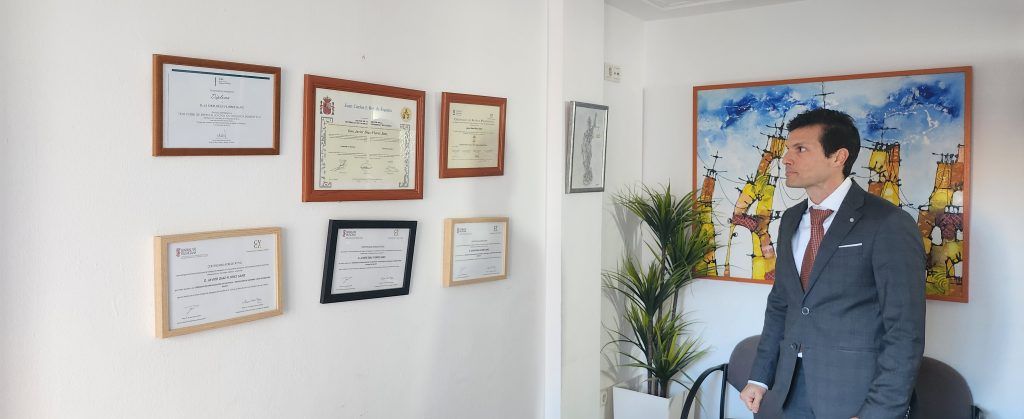
I am Javier Sanz, a lawyer focused on criminal defence in gender-based violence proceedings
I understand how overwhelming and distressing it can be to face an accusation of gender violence, especially at a moment when it feels like the world judges you without knowing the full story.
AT MY LAW FIRM, YOU WILL BE HEARD WITH THE RESPECT AND DIGNITY YOU DESERVE, WITHOUT PREJUDICE.
The Spanish Constitution, in Article 14, establishes the equality of all before the law, and in Article 24, the right to a fair trial and the presumption of innocence until proven otherwise.

Our Commitment
The quality of service we guarantee
RESPONSIVE SERVICE
During office hours, we aim to respond as promptly as possible. Messages received outside office hours will normally be answered on the next business day. For urgent situations, use the 24-hour contact number.
No matter the challenge you face, we are here to address it with the highest professionalism and efficiency.
We speak your language, without technical terms or professional jargon, but most importantly, we know how to listen and put ourselves in your shoes.
From Monday to Friday, from 9:00 AM to 2:00 PM and from 4:30 PM to 8:00 PM.
For urgent situations, we are available 24 hours a day because we know some circumstances cannot wait.
How Your Initial Call Works
If you are seeking justice, you are in the right place.
Speak with dedicated legal professionals.

+34 637 342 483
hola@abogadoviolenciadegenero.com
Protection Orders and Family Proceedings
You may choose whether to give a statement to the police, Civil Guard or court. You have the right to remain silent and should decide only after speaking privately with your lawyer.
If you are detained, ask to speak to a lawyer and do not make a statement before receiving legal advice. If a restraining or no-contact order is in force, comply with it strictly, even if the other person contacts you.
A protection order may affect contact with children, but only according to the court’s terms. Read the order carefully and obtain legal advice before acting.
Preserve messages, call records, documents and potential witness details. Do not alter evidence or contact the complainant in breach of a court order; share the material with your lawyer.
Testimonials
Client testimonial. Individual experiences and outcomes vary; no result is guaranteed.

En una situación tan tan complicada como “la violencia de género” donde todo el mundo y otros abogados me decían que es impossible salir de esta y teniendo una hija por medio de 8 meses, demostró que era inocente y estoy fuera de cualquier tipo de cargo.
De mi experiencia personal puedo decir que se tiene que ser moderno para seguir las leyes modernas que cambian constantemente y por eso el os podrá dar el mejor servicio possible por estar al tanto del presente y no medio estancado en el pasado como los otros abogados con medallas, que no me podían dar ni siquiera fe.
Clear information and support throughout the proceedings
Receive practical information about defence rights, court hearings and compliance with protective measures.
General information can help you prepare, but it does not replace legal advice on the facts of your case.
What does the procedure involve?
After a complaint is filed, the authorities assess the circumstances of the case. The person reported may be arrested and, where appropriate, an urgent hearing may be held to decide on a protection order and other precautionary measures.
FAST-TRACK PROCEEDINGS
If the case meets the requirements for fast-track proceedings, the duty court carries out the urgent investigative steps and hears the Public Prosecutor and the parties that have appeared on whether to open the trial, dismiss the case and impose precautionary measures.
If a protection order is requested, the court holds an urgent hearing, avoids confrontation and hears the victim and the person under investigation separately. That hearing must be held within no more than 72 hours of the request.
The court decides whether to impose criminal or civil measures in light of the available indications, the risk and the specific circumstances. There is no rule requiring the prosecution always to request an order or the defence always to oppose it.

PLEA AGREEMENT
If there are sufficient indications and the legal requirements are met, a plea agreement may be considered. Before deciding, the accused person must understand the charge, the proposed sentence and the consequences of the agreement.
In certain fast-track cases, a guilty plea results in a one-third reduction of the sentence requested. This reduction does not apply automatically to every plea agreement.
If there are insufficient indications, the defence may request dismissal; the court decides.

TRIAL
If the case proceeds to trial and there is no plea agreement, it is referred to the competent court for trial. At the hearing, the admitted evidence—statements, documents and expert evidence—is presented, and the court delivers judgment after considering all the evidence.
In fast-track proceedings, the duty court must schedule the hearing for the earliest possible date and, in any event, within the following 15 days. This time limit is specific to fast-track proceedings and does not apply as a general rule to all criminal cases.
APPEAL
A judgment delivered by the Criminal Court may be appealed to the Provincial Court. In ordinary abbreviated proceedings, the time limit is 10 days from notification; if the judgment follows fast-track proceedings, the special time limit is 5 days. The type of proceedings and the notification date should always be checked.
Tell Us About Your Case
Speak with professionals who truly understand your case.
+34 637 342 483
hola@abogadoviolenciadegenero.com
Surely you still have doubts
I have prepared a list with some of the most frequently asked questions, but if you still have questions, write to us at hola@abogadoviolenciadegenero.com and we will help you
Detention may last only for the time strictly necessary to carry out the urgent investigative steps and, in any event, for no more than 72 hours. Before that period expires, the arrested person must be released or brought before a judge.
The violence suffered may be either physical (injuries) or psychological (insults, threats, etc.).
Violence against a woman may be reported by the woman herself to the State Security Forces (Police Station or Civil Guard Headquarters) or directly before the Court. In fact, in Valencia there are specialized offices available for this purpose.
It may also be reported by witnesses of the events, including law enforcement officers or medical professionals assessing the victim, who will submit the medical report directly to the courts.
If you are arrested, you may freely choose a lawyer or request a duty lawyer. No authority or officer should recommend a particular professional; they must only inform you of this right. The appointed lawyer must attend as promptly as possible and, in any event, within three hours of receiving the instruction—not within three hours of the arrest. Before making a statement, you may speak privately with your lawyer and decide, with their advice, whether to answer questions, remain silent or decline to answer specific questions.
The complainant may state that they do not wish to continue as a private prosecutor, but a complaint cannot be withdrawn in a way that forces the proceedings to be closed. The Public Prosecutor and the court may continue if there are indications or evidence. Whether the right not to testify applies must be assessed case by case under Article 416 of the Spanish Criminal Procedure Act and its exceptions.
There is no general 72-hour deadline from the complaint for a fast-track trial to be held. The duty court carries out the urgent investigative steps and decides how the case should proceed. If it opens the trial, the hearing must be scheduled for the earliest possible date and, in any event, within the following 15 days.
A protection order is a court order that may be made when there are indications of an offence and an objective risk situation. It may include criminal and civil measures, such as bans on approaching or communicating, use of the family home, custody, contact arrangements or maintenance. The hearing must be held within no more than 72 hours of the request.
Breaching a court-ordered ban on approaching or communicating may amount to a separate offence of breach of a court order. In the cases covered by Article 468(2) of the Spanish Criminal Code, the prescribed sentence is imprisonment from six months to one year. The actual consequence depends on the facts, the evidence and the court’s decision; it does not automatically mean immediate imprisonment.
In fast-track proceedings, the duty court must schedule the trial for the earliest possible date and, in any event, within the following 15 days. Outside that procedure there is no single deadline: timing depends on the type of case and the court’s workload.
Breaching a court-ordered ban on approaching or communicating may amount to a separate offence of breach of a court order. In the cases covered by Article 468(2) of the Spanish Criminal Code, the prescribed sentence is imprisonment from six months to one year. The actual consequence depends on the facts, the evidence and the court’s decision; it does not automatically mean immediate imprisonment.
The right to use the family home does not depend solely on who owns or rents it. The court considers the protective measures, the family circumstances and, where there are children, their best interests. The specific court order should be checked before any action is taken.
The law provides for the right to immediate school enrollment when a change of residence is required as a consequence of being a victim of gender-based violence.
Yes, by requesting that their personal information be protected and withheld from the Municipal Register.
Police assistance or judicial authorisation may be requested to collect personal belongings, particularly where a restraining order or a risk situation exists. No one should go to the home or contact the other party in breach of a court order.
There is no single answer: it depends on the right to use the home, the court measures in force and the circumstances of the case. If there is a protection order or a dispute over the home, seek legal advice and, if there is a risk, contact the police before changing the locks.
Leaving the home does not in itself constitute the offence of family abandonment. However, it may have practical consequences for family measures, the home or the care of children, so the situation should be documented and legal advice sought as soon as possible.
Custody is decided by the court in accordance with the children’s best interests and the established circumstances. Neither parent can decide the outcome unilaterally or prevent contact outside the court measures in force.
You should file a request for parental responsibility and child-related measures before the Court as soon as possible.
You may apply for a court-appointed lawyer through the local Bar Association.
Visits may be arranged at a Family Contact Centre or through another handover system that avoids direct contact between the parents. The measure must be ordered by the court in accordance with the children’s best interests and the circumstances of the case.
As a person under investigation or an accused person, you have the right to remain silent, to refuse to answer some or all questions, not to incriminate yourself and not to confess guilt. The decision on whether to give evidence should be made with your lawyer after reviewing the case file.